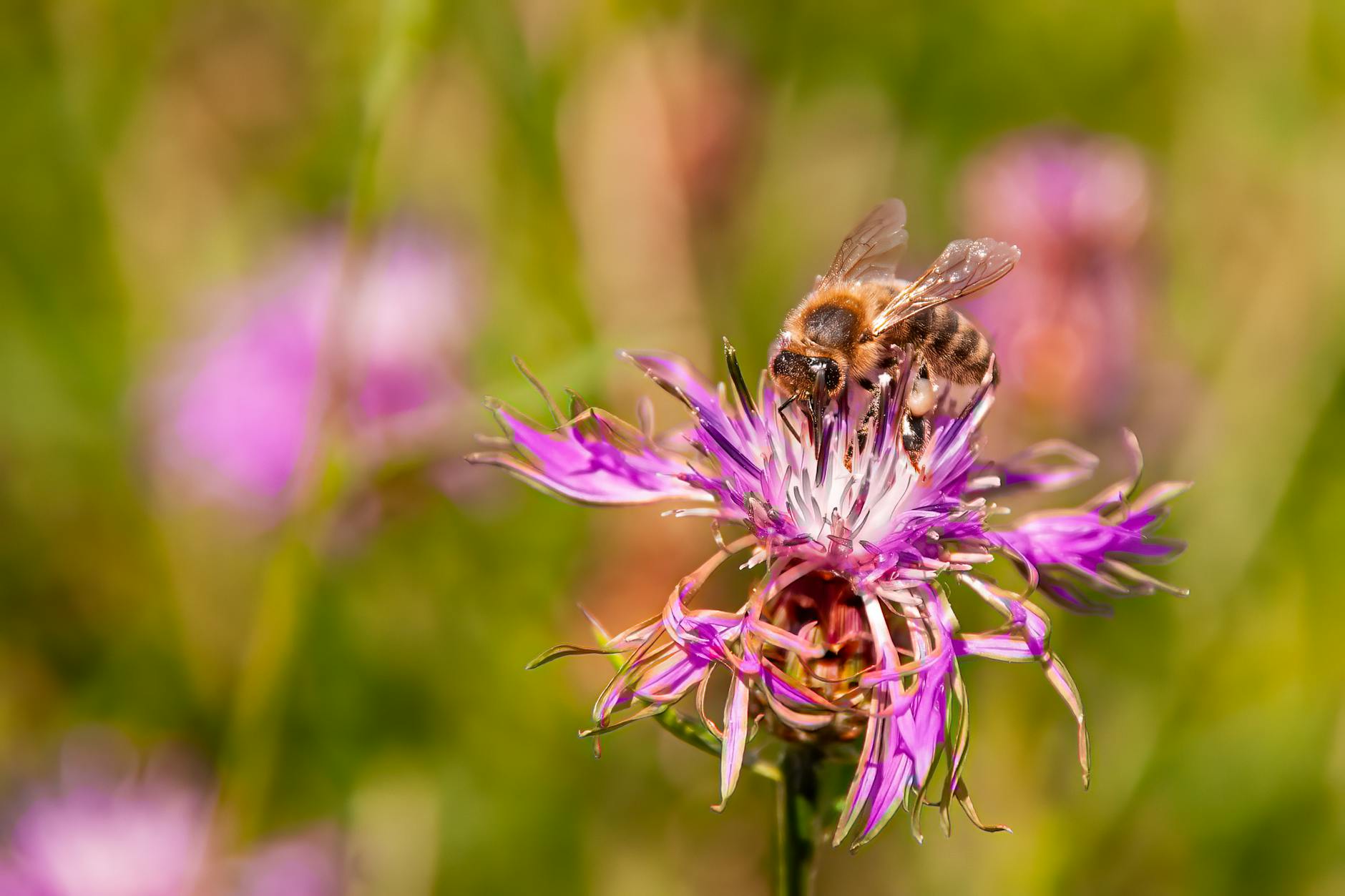
In 2023 I turned a 10-by-20-foot strip along our side yard, which had been struggling lawn and two rusting tomato cages, into a pollinator bed. It is three summers in now, and the number of bees, wasps, and butterflies it draws is frankly a little embarrassing, considering how cheaply it went in. My total cost was $118.47, and I have the receipts somewhere. Here is the approach, which I think is more useful than the shopping list.
The principle that saves you money
Nurseries sell perennials in 1-gallon pots for $14-20 each. If you tried to fill a 200-square-foot bed with 1-gallon plants spaced a foot apart, you would be spending nearly $3,000 before mulch.
You do not need to do that. Pollinator plants are, with very few exceptions, ridiculously easy to grow from seed. Most are native or naturalized species that want to reproduce by seed. They germinate without fuss and reach full size in one to two seasons. Nursery-grown pollinator plants are a convenience upgrade, not a quality upgrade.
A 1-gallon plant is 30 cents of seed, $2 of soil, a few minutes of labor, and six to ten months of patience that the nursery charged you $14 for.
My actual budget
Seeds (from Botanical Interests, Hudson Valley Seed):
  Echinacea purpurea, 1 pkt          $3.99
  Rudbeckia hirta, 1 pkt             $3.49
  Zinnia elegans mix, 1 pkt          $3.29
  Cosmos bipinnatus, 1 pkt           $3.29
  Borage, 1 pkt                      $3.49
  Dill, 1 pkt (for swallowtails)     $2.99
  Calendula, 1 pkt                   $3.49
  Bee balm (Monarda), 1 pkt          $4.29
  Nigella, 1 pkt                     $3.29
                                   -------
                                    $31.61

Bulbs and starts (limited splurge):
  1 goldenrod (Solidago) start       $9.99
  1 milkweed (Asclepias tuberosa)    $14.99
  Mountain mint (Pycnanthemum)       $10.99
                                   -------
                                    $35.97

Mulch: 1 cubic yard arborist chips   FREE
  (from ChipDrop, worth every free)

Soil amendments:
  1 bag of compost                   $9.99
  Bone meal, small bag               $8.99
                                   -------
                                    $18.98

Tools already had: rake, trowel, gloves

Hose upgrade (drip for year 1):      $31.91

                              Grand total:
                                   $118.47
The plants I chose, and why
Pollinator gardens work best when you have something blooming from early spring to late fall. That is the whole game: staggered bloom through the season, so there is always a food source. Here is how my bed is laid out, bloom time roughly ordered:
Early (April-May)
- Borage. Blue star flowers, self-seeds aggressively. Favorite of mason bees and honeybees. Grown from seed, blooms in year one.
- Calendula. Reliable early color. Great for hoverflies and bumblebees.
Early summer (June)
- Bee balm (Monarda). Magnet for hummingbirds and long-tongued bees. From seed, blooms year two.
- Milkweed (Asclepias tuberosa). The one native I splurged on as a plant, because seed germination is slow and monarchs need it early.
- Nigella (love-in-a-mist). Cheap, elegant, and bees adore the flowers.
Mid-summer (July)
- Echinacea purpurea. The cornerstone of any pollinator bed. From seed, blooms year two. Goldfinches eat the seeds in October.
- Black-eyed Susan (Rudbeckia hirta). Blooms year one from seed, a true workhorse.
- Cosmos. Annual, but so productive it does not matter. Pink, white, chocolate-colored varieties all work.
- Dill. I know, an herb. But black swallowtails lay eggs on dill, and the flowers feed every tiny wasp in the neighborhood.
Late summer (August-September)
- Zinnias. Annuals. Bring in hummingbird moths and butterflies. Cut them and they keep producing.
- Mountain mint (Pycnanthemum). The single most bee-attractive plant I have ever grown. Bees, wasps, hoverflies, all of them, all day long. Worth the starter plant.
Fall (October)
- Goldenrod (Solidago). Essential late-season food for migrating monarchs and hibernating bumblebee queens. One plant becomes a clump of ten in two years.
Starting from seed, realistically
Most pollinator seeds can be direct-sown in spring after last frost. A few prefer winter sowing (scattering on bare soil in December for natural stratification). A few, like milkweed and some milkweeds and lobelias, need 60 days of cold stratification to germinate, which is when the seed-starting blog posts start to feel like a project.
For my bed I direct-sowed cosmos, zinnia, calendula, borage, dill, nigella, and black-eyed Susan in mid-April. I winter-sowed (a milk-jug method, Google that for details) echinacea, bee balm, and a packet of Monarda I picked up later. Milkweed, goldenrod, and mountain mint I bought as plants because I did not want to deal with their germination quirks.
Year one was heavy on annuals (cosmos, zinnia, calendula). Year two the perennials caught up. Year three is the first summer the bed looks like what I pictured at the beginning. This is the budget tax, and it is fine.
Bed prep, the boring part
For a strip that was lawn, I sheet-mulched in October of the previous year: cardboard laid flat over the grass, overlapping, then 4 inches of arborist wood chips (free from ChipDrop) on top. By April the grass underneath was dead and the cardboard was breaking down. I raked back the chips, scored the cardboard, amended with a bag of compost and two handfuls of bone meal per 50 square feet, and was ready to plant.
No tilling, no Roundup, no sod removal. Six months of patience before planting season is the cheapest possible bed prep for anyone converting lawn.
What I learned, year by year
Year one was mostly annuals and self-doubt. The bed looked thin and the perennials were invisible. Bees did not start really showing up until late July. My advice to my year-one self: patience, and more zinnia seeds. Zinnias carried the bed visually that first summer.
Year two the perennials exploded. Echinacea was 3 feet tall by July, bee balm was already self-seeding into new spots, goldenrod had tripled. This was the first summer I saw a monarch in our yard, on the milkweed I had almost not bought. The annuals reseeded themselves from year one, so I did not need to buy seeds again.
Year three, which is now, has a visible maturity to it. Mountain mint is the size of a small shrub and covered in bees from 10 AM to 6 PM every sunny day. The echinacea and black-eyed Susan have colonized new sections. Goldenrod is close to 5 feet tall in a fully established clump. I have added almost no new plants since year one.
The things I chose not to do
- Sterile hybrids. A lot of pretty commercial pollinator plants (double-bloom coneflowers, for example) have been bred for looks at the expense of nectar and pollen. A bee on a double-flowered coneflower is like a person trying to find the exit of a carnival funhouse. Stick to straight species or single-flowered cultivars.
- Pesticides. Even organic pesticides (like pyrethrin) kill pollinators. If you have a pollinator garden, you accept that some things will be nibbled. That is part of the deal.
- Lawn around the bed. I left a 3-foot strip of unmowed space on both sides of the bed, which feels wild and annoys the neighbor whose yard borders it, but it has turned into excellent bumblebee nesting habitat. Dandelions, clover, and self-heal cover it in spring and nobody seems to notice once the main bed flowers start.
What I'd actually do
If you are starting a pollinator bed this spring on $100-150, buy 8-10 seed packets covering early, mid, and late bloomers, plus 2-3 starter plants for the hard-to-seed natives that matter for specialist pollinators. Sheet-mulch over lawn the fall before, direct-sow annuals, winter-sow perennials, and accept that year one will look thin. By year two you will have a bed that feeds local bees better than any nursery could have assembled for ten times the money, and the self-seeding perennials will mean the bed pays for itself many times over for as long as you keep it.