Portland has a reputation as a rainy city, and in November it is. In July and August, it is a Mediterranean climate with a 60-day dry spell and daytime highs that touch 100°F. Every plant list labeled “drought-tolerant” is not actually drought-tolerant when you stop supplementing it with the hose. I learned this one summer when I went to visit my brother for three weeks and came back to a garden that looked like a disappointment.
These are the perennials that held up through that trip, and through the hotter summers since. Every one of them is planted in my front yard or hellstrip, which gets 3 feet of rain a year in winter and essentially none between July 1 and October 1. None of them receives supplemental irrigation after the first summer. Everything is zone 8b, well-draining soil, full to partial sun.
Lavender, specifically the right kind
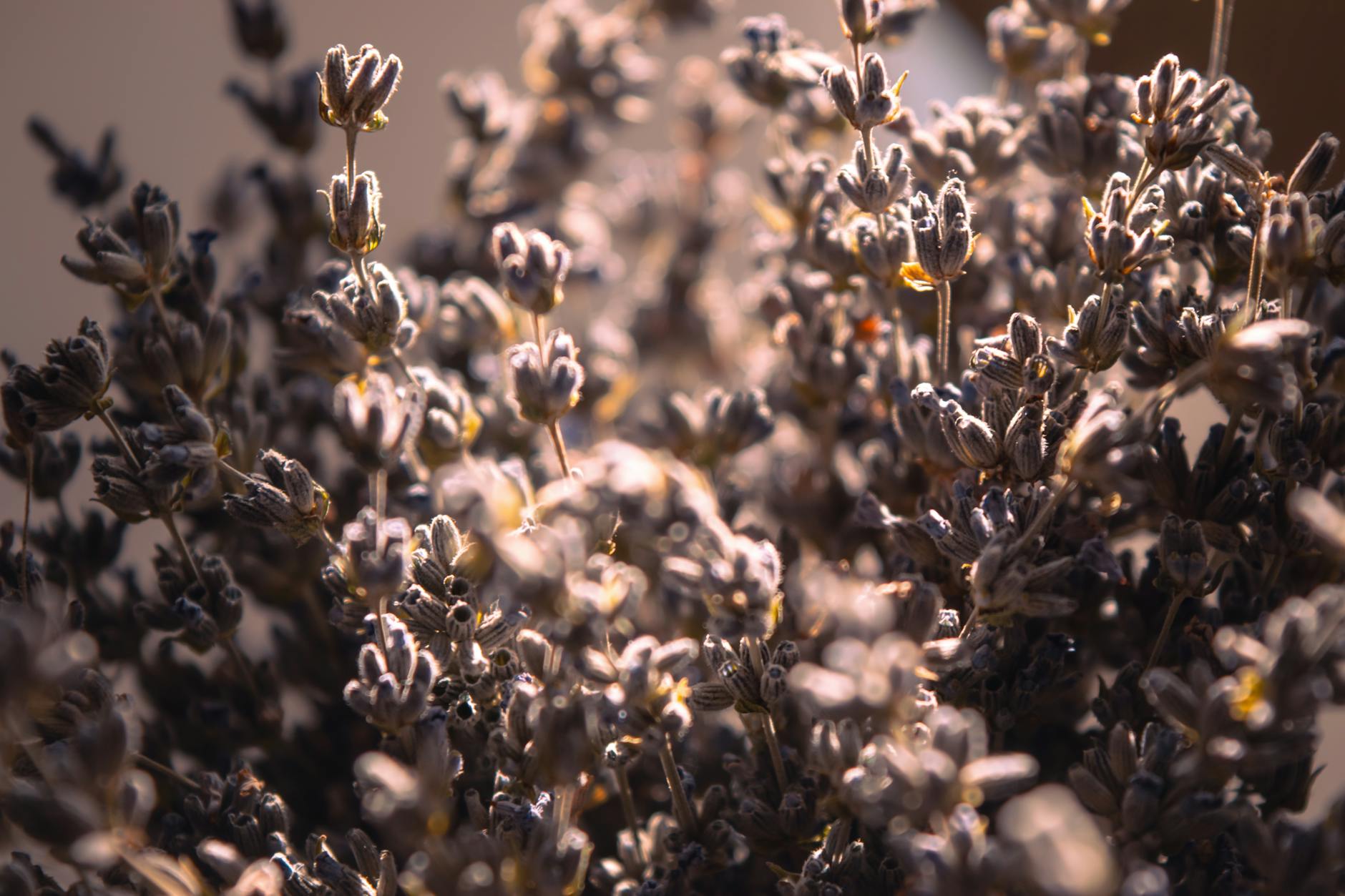
Lavender is the cliché drought plant and also the one most frequently killed by gardeners. The culprit is almost always the wrong variety for the climate combined with wet winter feet. ‘Hidcote’ and ‘Munstead’ are the English lavenders (Lavandula angustifolia) that survive Portland winters reliably. Spanish lavender and French lavender die in the second wet December.
I grow six ‘Hidcote’ and four ‘Munstead’ along a south-facing slope, planted on 18-inch mounds so water runs off in winter. They have not been watered since their first summer. I prune them back by one-third in August, never cutting into old wood, and they come back every year looking better than they did the last.
Russian sage
Perovskia atriplicifolia, now reclassified as Salvia yangii (we are still working through this). Regardless of the name, it is the toughest perennial in my garden. Silver-green leaves, lavender-blue flower spikes from July through October, 4 feet tall and 3 feet wide at maturity, and it wants nothing from you.
The one I grow is the straight species, not a cultivar. Cultivars like ‘Denim ‘n Lace’ stay shorter and denser, which is nice if you have limited space, but the species is more vigorous and throws more flowers. I cut it back to 6 inches every spring and it rebuilds itself by June.
Agastache (hyssop), especially ‘Blue Fortune’
This is the plant that most surprised me. Agastache ‘Blue Fortune’ grows 3 feet tall, produces dense lavender-blue spikes for 10 weeks, and draws every pollinator within a mile. Bees literally lift off it in waves when you walk past. In five summers, including two drought years, mine has never needed water after July.
The orange-flowered species Agastache rupestris (‘Sunset hyssop’) is also excellent and has an extraordinary licorice- root fragrance from the foliage. It is shorter-lived (3-4 years) but self-seeds politely, so you usually have the next generation already growing by the time the parent fades.
Yarrow
Achillea millefolium is a native of both North America and Europe, which explains why it survives absolutely anything. The common white-flowered species is aggressive enough that I keep it out of beds and let it take over the hellstrip instead. For beds, the cultivars ‘Moonshine’ (soft yellow, silver foliage) and ‘Cerise Queen’ (bright pink) stay politely clumped.
Yarrow does one thing most drought plants do not: it stays looking fresh in August. When the lavender is getting tired and Russian sage is mid-reset, yarrow is at peak bloom. I cut the spent flowers back hard in early September and get a second, smaller flush before frost.
Sedum (now properly Hylotelephium) ‘Autumn Joy’
An old-garden standard, still the best for reliability. Starts as broccoli-like green heads in June, blushes pink in August, deepens to rust-red by October, and holds its dried flower heads all winter like little brown chandeliers. Stores water in fleshy leaves, so it handles drought by design.
Plant it in full sun. In part shade it flops sideways and never really recovers. Cut it back to 2 inches in late winter, right before new growth pushes. That is the total maintenance.
Salvia, the Mediterranean kinds
Specifically Salvia nemorosa and Salvia x sylvestris. The named cultivars ‘Caradonna’ (dark stems, deep violet flowers) and ‘Blue Hill’ (true blue, shorter) are both excellent. They bloom in May-June, and if you cut them back hard right after the first flush, they bloom again in August.
Regular garden salvias like ‘Rose Queen’ or ‘May Night’ work too. Stay away from Salvia greggii cultivars in Portland unless you are in a microclimate. They want drier summers and do fine in Arizona, but our winters kill them.
California poppy, if you count it as perennial
Eschscholzia californica is technically a tender perennial in its native range and reliably reseeds everywhere else. In my hellstrip it has seeded itself into a low carpet of silvery-green lacy foliage and vivid orange flowers that blooms from April into August. It is the exact opposite of a needy plant. You plant it once, maybe twice. After that it maintains itself.
Echinacea
Coneflowers are more drought-tolerant than most lists give them credit for, once established. The straight species E. purpurea drinks deeply from a taproot and handles long dry stretches after the first year. The newer colorful hybrids (‘Cheyenne Spirit’, ‘Sombrero’ series) I have had mixed luck with. They are showier but shorter-lived, two to three seasons in my experience.
Leave the seed heads up through winter. Goldfinches feed on them in October, and the dried cones look good against frost. Cut them back in late February when the new basal rosettes emerge.
Ornamental grasses
Almost all ornamental grasses are drought-tolerant once established, and they buy you the vertical texture that most perennial gardens are missing. My three workhorses:
- Karl Foerster’s feather reed grass. Upright, architectural, 5 feet tall with tan plumes. The most reliable structure plant in my garden.
- Little bluestem. Native to North America, 2-3 feet, turns coppery-red in autumn. Deer-resistant, bird-favorite.
- Mexican feather grass. (Nassella tenuissima.) Low fine texture, 18 inches, blonde in summer. Some people say it self-seeds too much. Not an issue in my yard.
What I never managed to make work
In fairness, here is the list of plants that drought-tolerant guides kept recommending that I have given up on:
Plants that died on me despite promises:

- Agave parryi          (wet winter, not cold, killed it)
- Artemisia 'Powis Castle'  (three winters, three deaths)
- Santolina chamaecyparissus  (mushed in the first wet year)
- Gaura lindheimeri       (short-lived, never quite looked right)
- Callistemon (bottlebrush)  (too cold for Portland in Feb)
- Leucadendron               (zone 9, not 8b, lied to myself)
These plants are genuinely drought-tolerant. They are not wet-winter-tolerant, which is the other half of Mediterranean gardening in the Pacific Northwest. A plant list from a California nursery will often skip this detail. Our problem is not the dry summer. It is that we pair it with a five-month wet winter, and not every drought plant survives having wet feet.
How I water the first summer
Even the toughest perennial needs a first year of establishment. I deep-water new plantings once a week, 10 gallons per plant, April through September of the first year only. Second year, only if we go more than four weeks with no rain and temperatures above 85°F. Third year, nothing. A plant that cannot handle year three on its own is not drought-tolerant, and it gets moved or composted.
What I'd actually do
If you are starting a drought garden in zone 7-9 with wet winters, I would pick three structural plants (Karl Foerster, one Russian sage, one lavender) and build outward from those. Add two yarrows, one sedum, one coneflower group of three, and Agastache ‘Blue Fortune’. Let California poppies seed around. Water the first year, taper the second, and then step back. What you want is a garden that looks better the less you do to it, and these plants cooperate with that goal. Mine has been aging into itself for six years now, and the older it gets, the less it asks of me.