Every May, I walk out to the back beds with a cup of coffee, check on my new kale seedlings, and find a cluster of tiny green bodies on the underside of the youngest leaf. The first year this happened, I panicked and ordered $60 worth of stuff from Amazon. Now I walk back inside, finish my coffee, and come back out with a spray bottle. Aphids are not an emergency. They are a conversation you have with your garden in late spring, every spring, and you have better tools than you think.
What aphids actually are
Aphids are sap-sucking insects about 1-4 mm long, usually green or black but sometimes white, pink, or gray. There are over 4,000 species worldwide. The ones in your garden are probably one of three: cabbage aphid (gray-green, waxy, loves brassicas), green peach aphid (pale green, everything-eater), or the common bean aphid (black, loves beans and nasturtiums). They reproduce asexually in warm weather, and one adult can produce up to 80 offspring per week. That is why a couple dozen on Monday becomes a few hundred by Friday.
They are not dangerous in any existential way. A healthy plant can tolerate a moderate aphid population without visible harm. The problems start when the population is allowed to explode (stunting, leaf curling, honeydew, sooty mold, virus transmission) or when the plant is already stressed (seedlings, transplants, drought-weakened plants). Your job is to keep numbers low, not to eradicate them.
Step one: the thumb
For small infestations on established plants, your hand is the best tool. Wet a garden glove, rub the cluster between thumb and forefinger, move on. I can clear a mid-sized tomato plant of 200 aphids in about three minutes this way. For roses with thorns, a cotton swab dipped in rubbing alcohol does the same job more safely.
It sounds primitive. It works better than most sprays for under 20 plants. The reason is that it is targeted, immediate, and does no damage to the beneficial insects that are going to show up in a week and finish the job for you.
Step two: the hose
A sharp jet of water from a standard garden hose, aimed at the undersides of affected leaves, will knock 80-90% of an aphid population off a plant. Aphids do not climb well, and most of the ones you dislodge will not find their way back. Repeat daily for three days.
This works best in the morning so the foliage dries before night (wet leaves overnight invite powdery mildew). I use the “center” setting on a Gilmour pistol nozzle, which is a tight stream without being a full jet, and I lift and flip each leaf to hit the undersides where the aphids actually live. This is the single most effective tool in my kit, cheaper than anything else, and gentler on the plant than any spray.
Step three: insecticidal soap
If the infestation is heavy enough that steps one and two are not keeping up, I move to insecticidal soap. Specifically potassium salts of fatty acids (Safer’s Insecticidal Soap is the standard), or you can mix your own: 1 tablespoon of liquid Castile soap (Dr. Bronner’s unscented) per quart of water. I find the homemade version just as effective.
Spray to dripping on the undersides of leaves, in the evening (to avoid scorching leaves in sun), and rinse the plant with plain water the next morning. Repeat every four to seven days until populations drop. Soap only kills on contact, so coverage matters more than concentration.
What soap does: it disrupts the waxy cuticle of soft-bodied insects (aphids, mealybugs, spider mites, whiteflies). What it does not do: harm most hard-bodied beneficial insects like ladybugs, bees, or parasitic wasps, provided you spray at dusk when pollinators are not active.
Step four: neem oil, reluctantly
Neem oil (specifically cold-pressed, containing azadirachtin) is a heavier tool. It works by disrupting insect hormones, which means aphids stop feeding, stop molting, and die over 24-72 hours. It also, frankly, works on a lot of things you do not want to kill, which is why I use it rarely and late.
I reach for neem when aphids have colonized a plant that is economically important to me (the peach tree, for instance) and the cheaper methods are not keeping up. Mix per label instructions (usually 2 tablespoons per gallon of water, plus a half teaspoon of soap as an emulsifier), spray at dusk, cover the plant completely, repeat in 7 days. Stop once populations are manageable. Do not make this part of a weekly routine.
Every time you reach for a spray, beneficial insects downstream of that spray pay some cost. I reserve neem for the two or three plants per year that truly need it. Everything else I handle with water, soap, or patience.
Step five: bring in reinforcements
Ladybugs are the famous one, and ladybugs do eat aphids, but purchased ladybugs usually fly away within 24 hours of release. Not worth the money. Two better options:
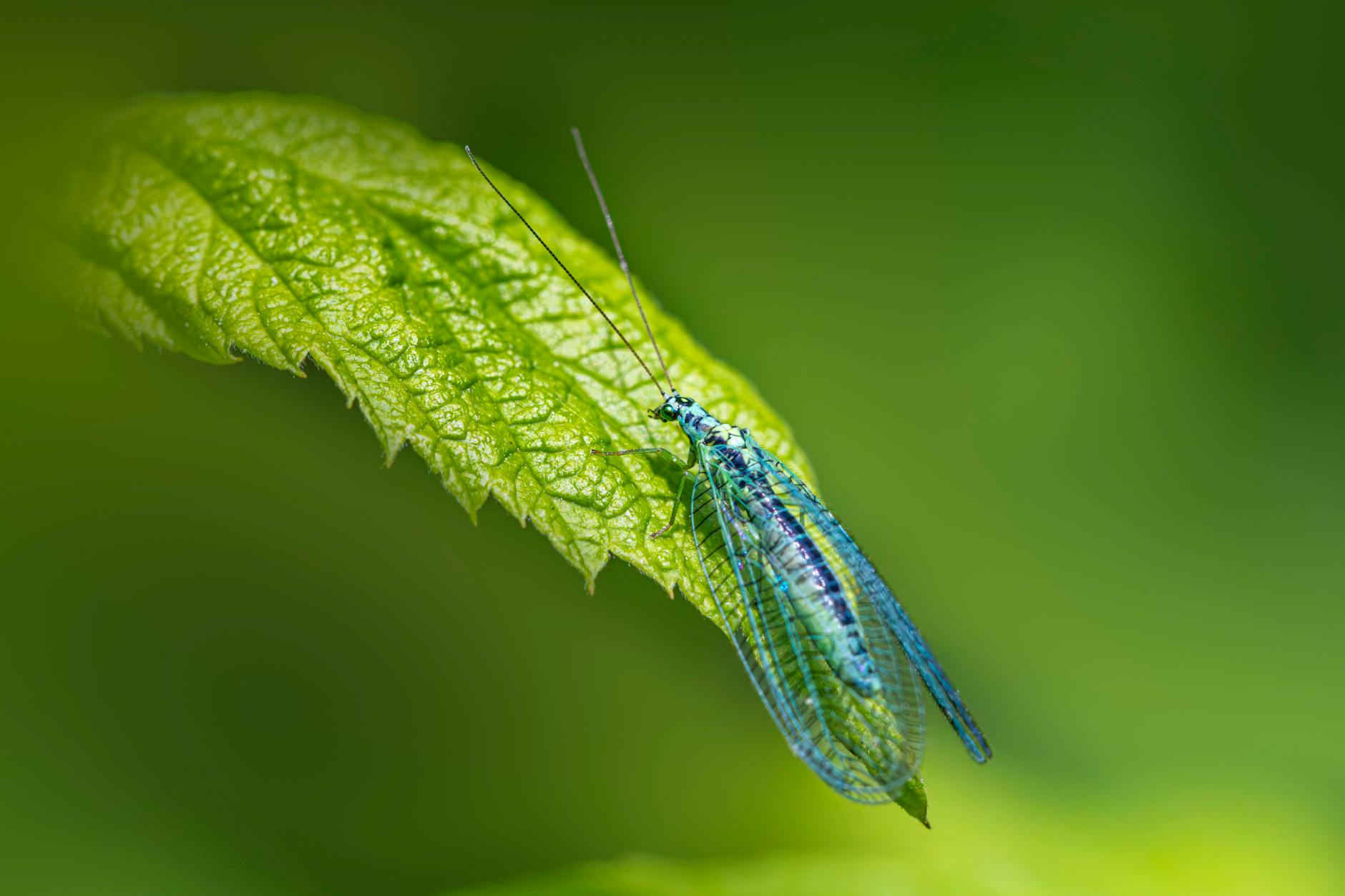
- Lacewings. Their larvae are the most voracious aphid predators in the garden. You can buy lacewing eggs from Orcon or Arbico Organics, and they actually stay where you release them because larvae cannot fly. One batch (1,000 eggs, $16) is plenty for a 400-square-foot garden.
- Parasitic wasps.Aphidius colemani, specifically. Tiny, non-stinging wasps that lay eggs inside aphids. The larvae develop inside the aphid, which turns into a papery brown “mummy” (this is one of my favorite sights in the garden). Available from the same suppliers.
Both work best as preventive tools. If you release lacewings in early May, you rarely see a real aphid outbreak in June. I do this every year now.
Prevention that actually works
Three habits that reduced my aphid pressure more than any spray:
- Feed gently and not too much. Soft, nitrogen- flush new growth is what aphids live for. A plant that is cruising on moderate nutrition is less attractive than a plant that is shooting out tender leaves from a recent fertilizer pulse.
- Plant nasturtiums as a trap crop. Black bean aphids love nasturtiums more than they love your vegetables. I plant a strip of nasturtiums at the end of each bed and they take 80% of the aphid pressure. When the nasturtium gets overwhelmed, I cut it to the ground and compost it, and the problem goes with it.
- Do not wipe out every “bad” bug. Your garden needs a background level of aphids for predators to stick around. A zero-aphid garden is a zero-beneficial-insect garden, and the next infestation will be worse because nothing is waiting to eat it.
The decision tree I actually use
See aphids on a plant:

  First, what plant is it?
    Seedling / transplant -> act fast, step 1+2
    Established veg -> observe 2-3 days
    Ornamental -> usually just watch
    Fruit tree -> step 2, then 3 if needed

  How bad?
    < 20 on a plant  -> rub with gloved hand
    20-200           -> hose, morning, 3 days in a row
    200-1000         -> hose + soap, evening spray
    > 1000, spreading -> soap, then neem if stalled
    Ladybugs already working -> do nothing, let them eat

  Throughout:
    Check for sooty mold on leaves below -> wash off
    Check for ants -> ants farm aphids, deal separately
    Track for 7 days, most populations crash naturally
Bottom line
Aphids come every spring. Most of the damage they do is cosmetic, and a healthy garden keeps its own populations in check through predators that you will not notice until you start looking for them. Your job is to step in when numbers climb past the plant’s tolerance, using the least aggressive tool that works. In four out of five years, for me, that tool is a garden hose in the morning. Save the heavy sprays for the one year in five when the aphids really do get away from you, and then put the bottle back in the shed for the next four.